
A 10 Min Warmup Routine
A time-efficient climbing warmup that pairs a hangboard finger warmup with simple full-body mobility during the built-in rest periods—so you’re ready to try hard without wasting session time.
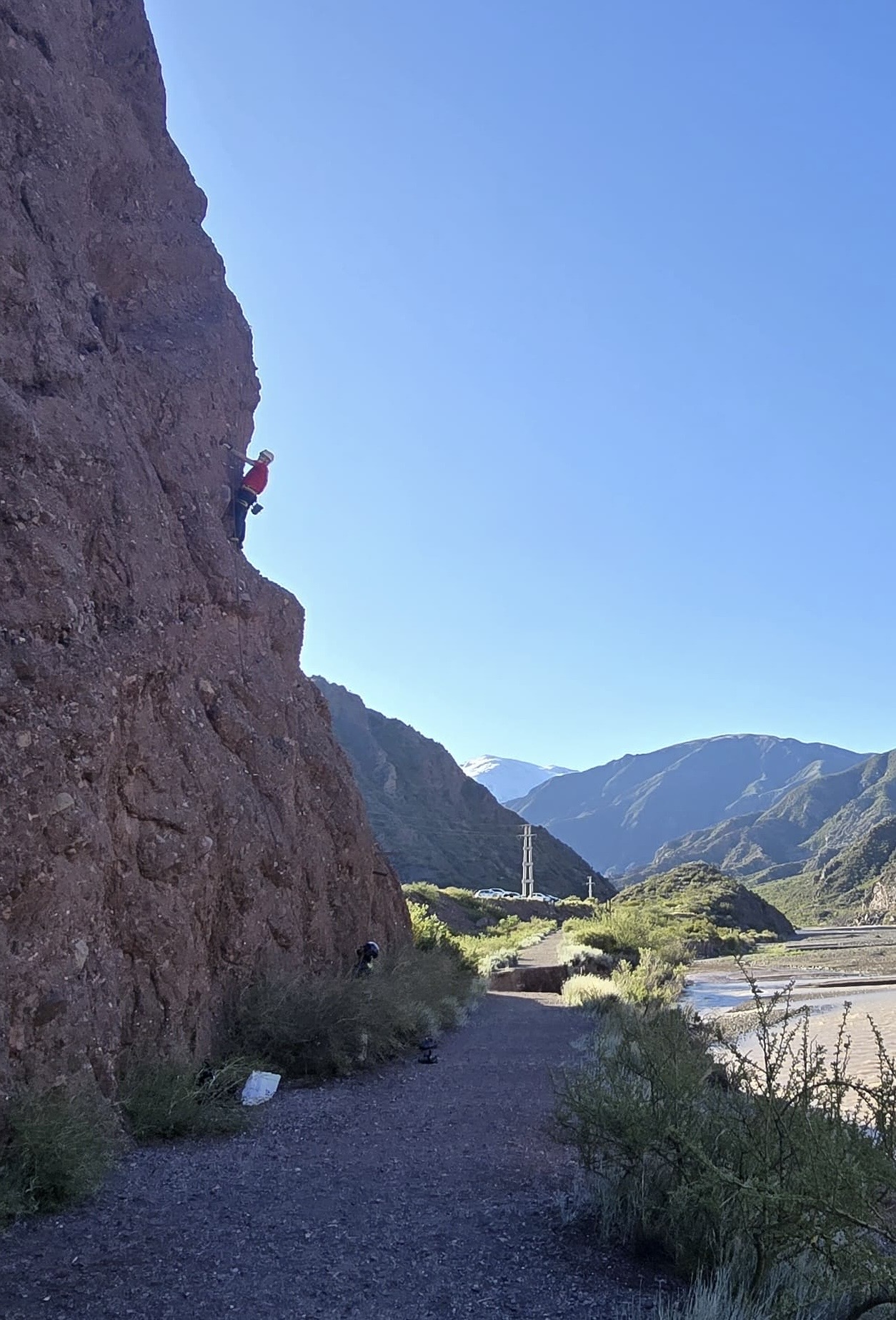
Juan A. Lopez Cavallotti
Progression AI Founder
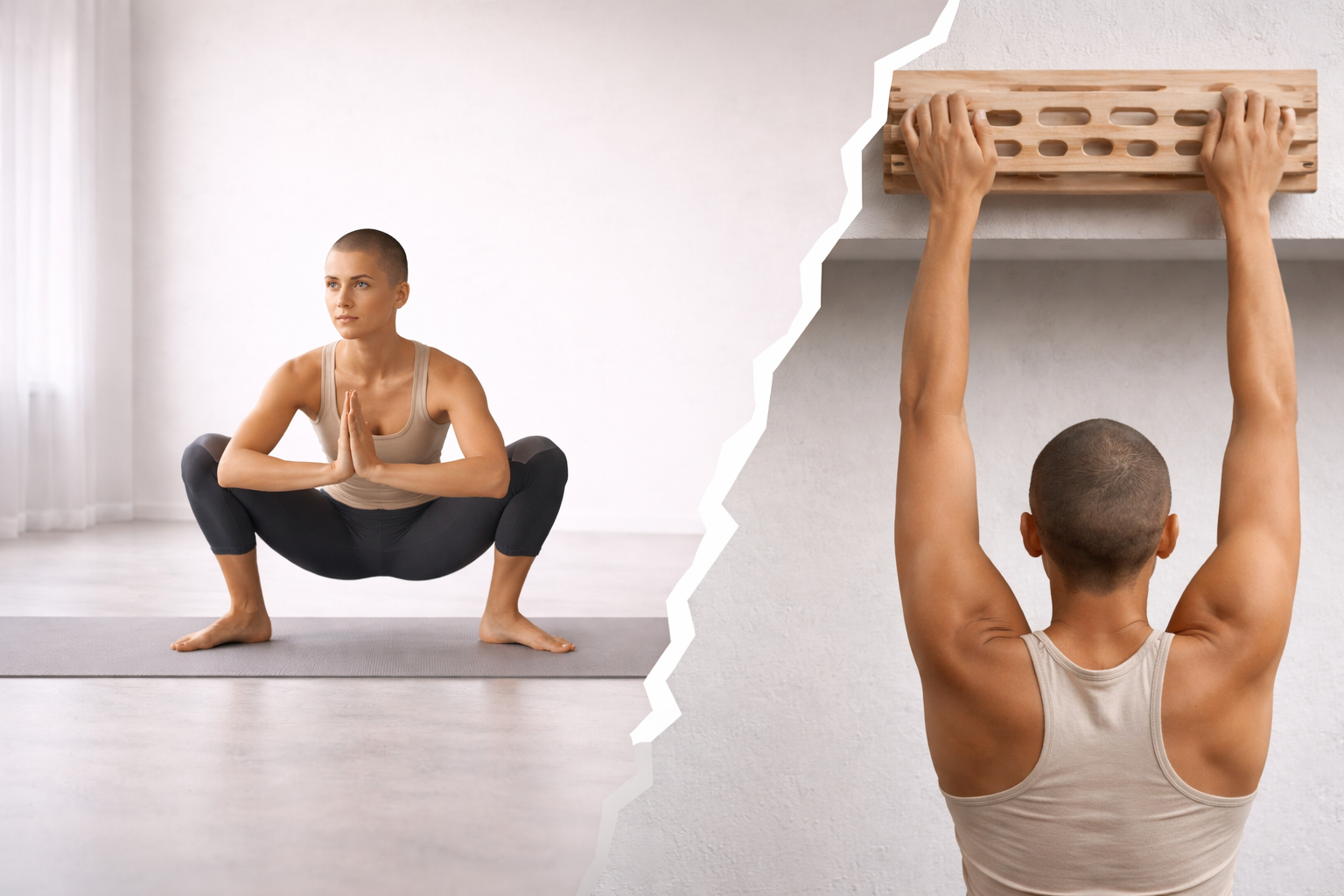
Warming up before climbing is one of the simplest ways to reduce injury risk and perform better during the session. It increases blood flow, raises tissue temperature, and helps your nervous system “wake up” so you can recruit strength and coordination without going from zero to max.
Just as importantly, a warmup is a built-in check-in: How do your fingers feel today? Are your shoulders moving freely? Does anything feel tweaky? That information gives you a chance to be smart about how you train—adjusting intensity and choosing the right kind of effort before committing to high-effort attempts.
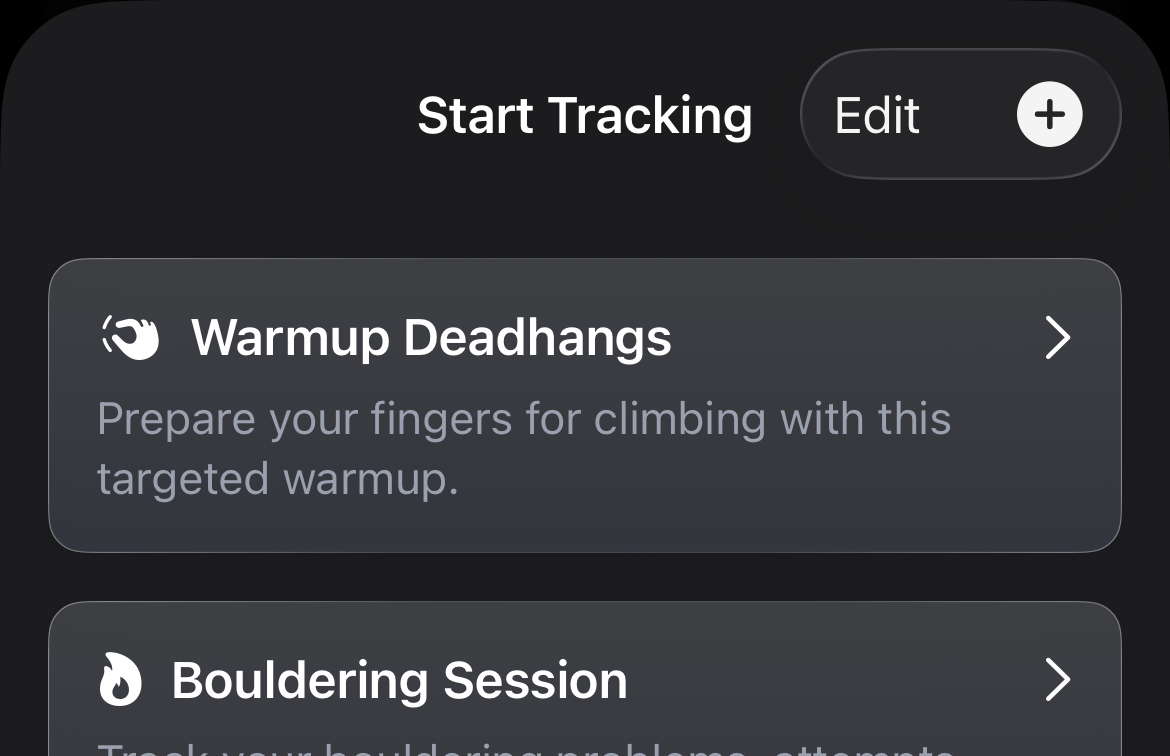
Progression AI includes a built-in finger warmup routine designed for a hangboard. The nice thing about that structure is the built-in 1-minute rest between sets. Instead of standing around, you can use those rest windows to warm up the rest of your body—shoulders, upper back, wrists, and core—so by the time your fingers are ready, everything else is too.
Here’s how I do it:
Rest #1: Arm circles (forward)
Use the first 1-minute rest to lubricate the shoulder joint and warm up the upper back—no tension, no speed.
How to do it:
- Stand tall, ribs down, glutes lightly engaged
- Let your arms hang long and relaxed
- Start with small circles, then gradually increase the circle size
- Do 45–60 seconds forward
- Keep it pain-free; if you feel pinching, reduce the range and slow down
Cues that make it feel better:
- Think “shoulder blades slide” (not “arms flail”)
- Keep your neck long and avoid shrugging
- Smooth, controlled circles beat fast circles
Rest #2: Arm circles (backward)
Same setup as rest #1.
- Do 45–60 seconds backward
- Keep the circles smooth and controlled
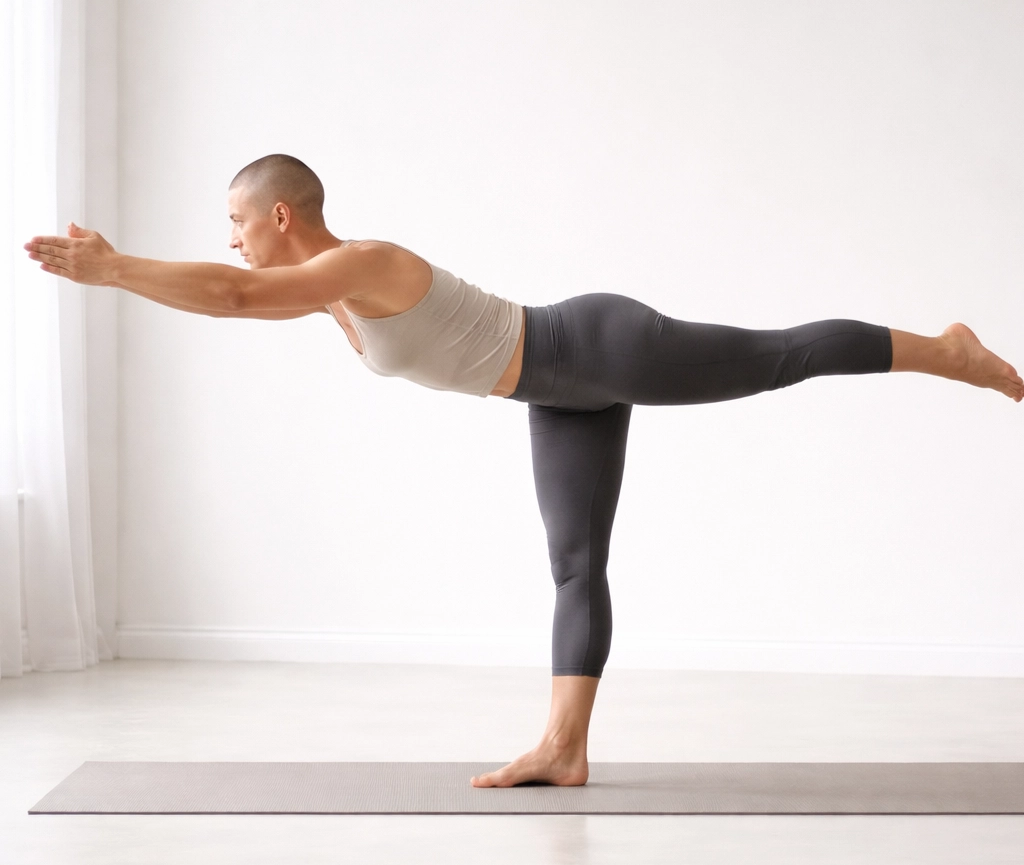
Rest #3–4: Warrior III (4 reps each leg)
I use the next two 1-minute rests for Warrior III to wake up balance, hips, hamstrings, glutes, and core—super useful before you start loading small footholds and keeping tension.
How to do it:
- Stand tall, shift weight onto one leg
- Hinge at the hips as your back leg extends behind you
- Aim for a straight line from head → heel (it’s fine if you’re not perfectly horizontal)
- Keep hips square to the floor; don’t open the lifted hip
- Reach arms forward (or keep hands on hips if balance is challenging)
Reps:
- 4 controlled reps on the left leg (hover into the pose, return to standing)
- 4 controlled reps on the right leg
- Repeat again on rest #4 (same pattern)
Cues:
-
Slow is the point—feel the hamstring and glute load
-
Lightly grip the floor with your toes for stability
-
If your lower back takes over, reduce the hinge depth and brace your core
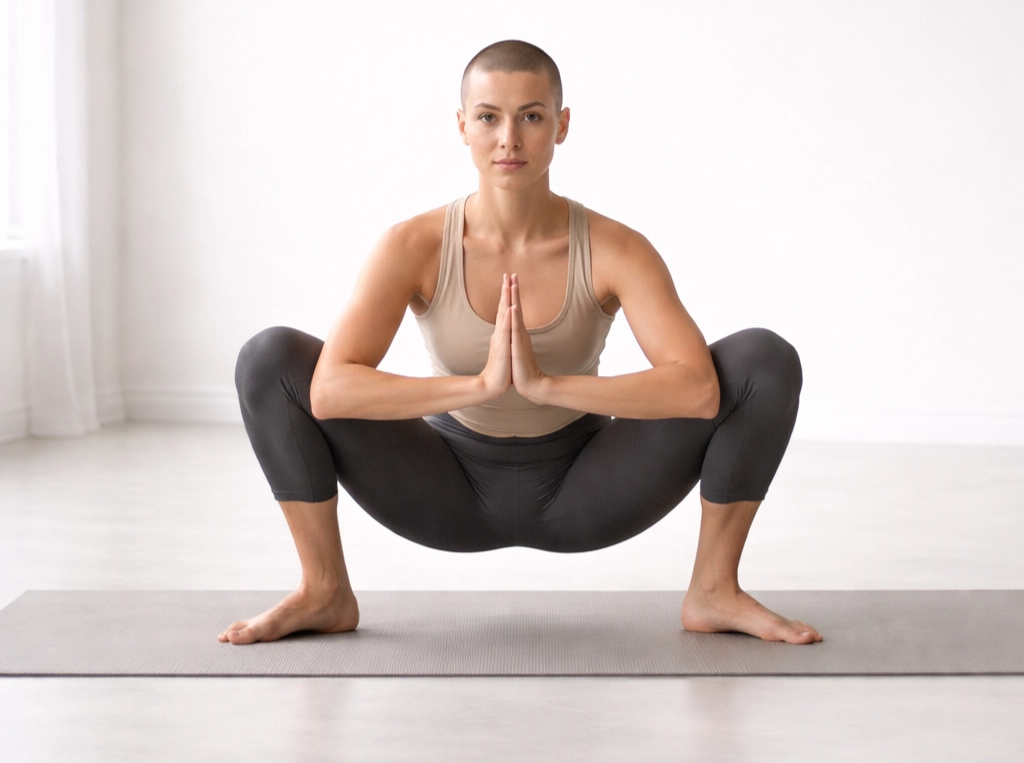
Rest #5–6: Frog squats
These open up hips/ankles and get you ready for high steps, drop-knees, and staying compact on the wall.
How to do it:
- Take a wide stance with toes slightly turned out
- Drop into a deep squat (as deep as you can while keeping your feet flat)
- Bring your elbows inside your knees and gently press your knees out
- Keep your chest tall and breathe slowly
Options (pick one depending on what feels good that day):
- Hold: sit in the bottom for 30–45 seconds
- Pulses: 8–12 slow pulses in/out of the bottom
- Side-to-side: shift gently left/right to find tight spots
Cues:
-
Keep your heels down; if they pop up, widen stance or reduce depth
-
Think “knees track over toes”
-
No bouncing into end range—smooth, controlled pressure
Rest #7–8: Side lunges
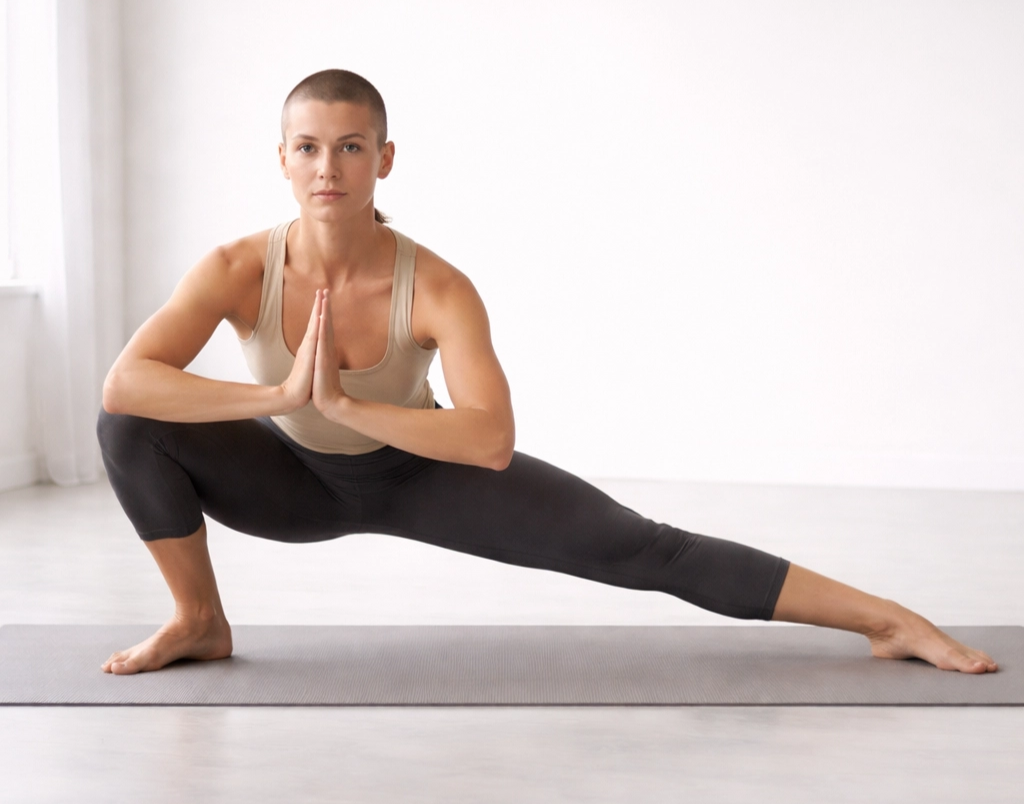
These warm up your adductors (inner thighs), hips, and ankles—great prep for wide stances, drop-knees, and high steps where you need lateral stability.
How to do it:
- Start standing with a wide stance, toes mostly forward (slight turn-out is fine)
- Shift your weight to one side and sit your hips back, bending that knee
- Keep the other leg straight, heel down, toes up or forward—whatever keeps it comfortable
- Keep your chest tall and spine long
- Push through the bent leg to come back to center, then switch sides
Reps:
- 6–10 slow reps per side during rest #7
- Repeat during rest #8
Cues:
-
Knee tracks over toes (don’t let it cave in)
-
You should feel a stretch in the straight leg’s inner thigh
-
Keep it controlled—no bouncing at the bottom
Rest #9: Gentle flexor + extensor stretches
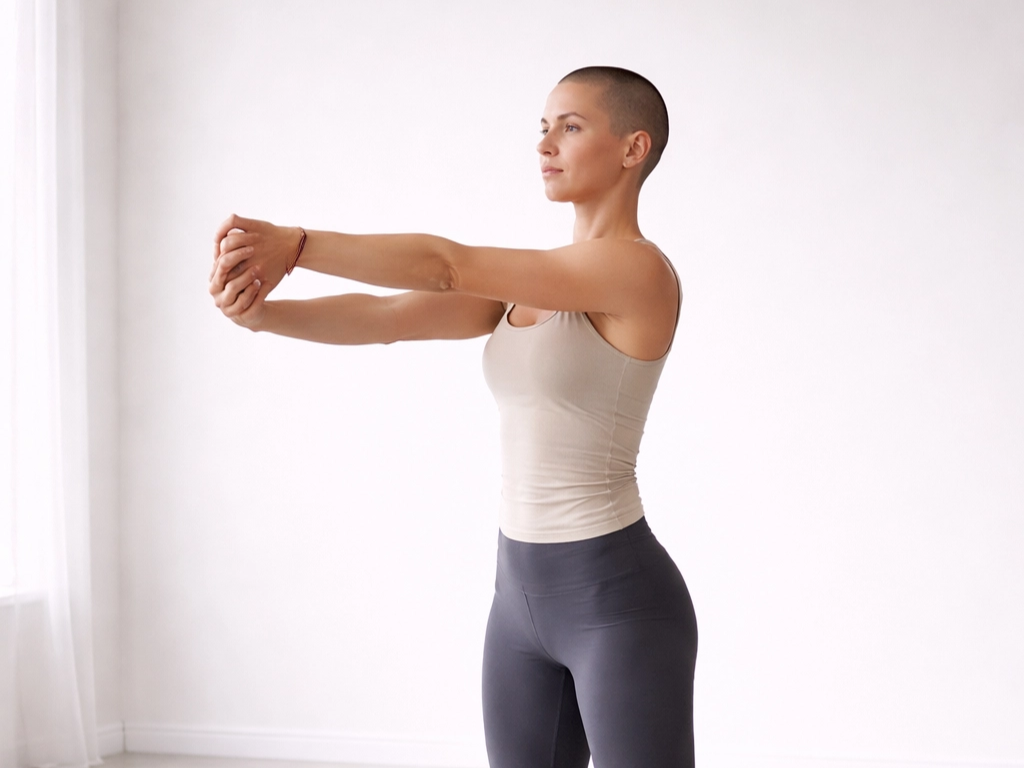
Finish with a quick, gentle stretch to bring some length back to the forearms after hanging.
Flexor stretch (palm up):
- Arm straight in front of you, palm facing up
- With the other hand, gently pull fingers down and back
- You should feel the stretch along the inside of the forearm
- Hold 20–30 seconds each side
Extensor stretch (palm down):
- Arm straight in front of you, palm facing down
- With the other hand, gently pull fingers down and toward you
- You should feel the stretch along the top/outside of the forearm
- Hold 20–30 seconds each side
Keep it light—no forcing. If you feel nerve-y sensations (tingling, sharpness), back off and shorten the range.
Closing thought: warm up efficiently, not lazily
Most of us skip warmups because we don’t want to “waste” climbing time. The trick is to make the warmup part of the session: use built-in rest periods to prep the rest of your body while your fingers come online. You’ll show up to your first hard attempts feeling more coordinated, more stable, and less fragile—without adding extra minutes to your day.
Keywords
Juan A. Lopez Cavallotti
Progression AI Founder
I am a rock climber and a software engineer. I am very passionate about training and love all kinds of sports and the outdoors.
Follow on Instagram (@juan.climbs)